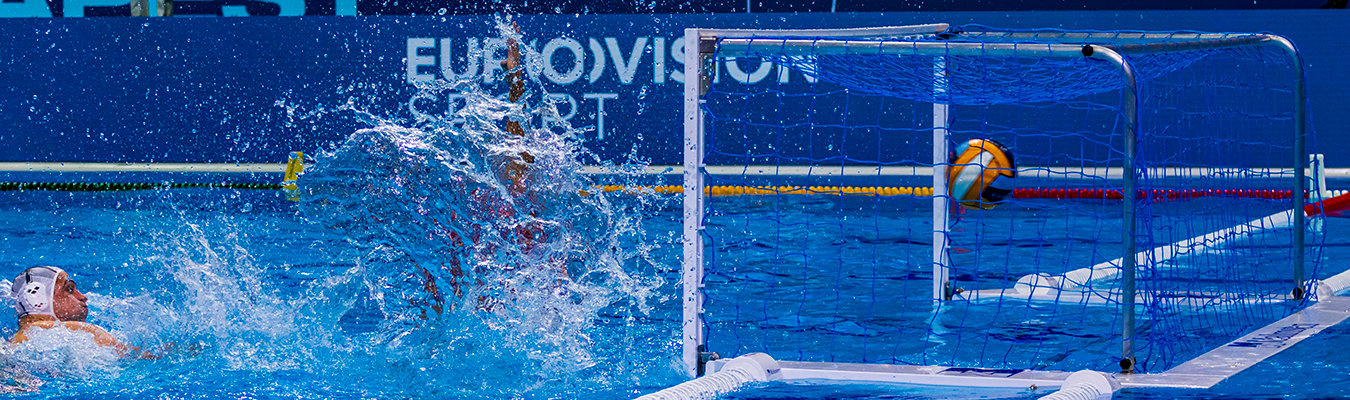
Water polo is one of the oldest Olympic sports. It is a dynamic and demanding team game that develops fitness, coordination, and teamwork skills. If you are considering organizing water polo training sessions or competitions, or you want to create professional conditions for practicing this sport, learn more below.
WATER POLO – RULES OF THE GAME
Water polo originated in Great Britain at the end of the 19th century, with Scotland often regarded as its birthplace. The first official rules of the game were developed by William Wilson in 1876 and later published by the London Swimming Association. Since then, the sport has gained popularity worldwide, especially in Europe.
The Most Important Rules of Water Polo
A water polo match is played by two teams, each consisting of seven players, including one goalkeeper. The objective is to score by placing the ball in the opponent’s goal. Playing in water, while constantly staying afloat, makes this sport highly demanding in terms of strength and endurance.
A water polo match consists of four quarters, each lasting 8 minutes of actual playing time. The clock is stopped whenever the referee blows the whistle. There is a 5-minute break at halftime. During play, players are not allowed to touch the bottom of the pool. In addition, the ball may only be thrown with one hand, and each team has 30 seconds to take a shot at the opponent’s goal.
Water Polo – Rules Concerning Fouls
In water polo, the following types of fouls are distinguished:
- Ordinary fouls – such as pushing off from the side or bottom of the pool, holding the ball underwater, holding it with both hands, or hitting a player who is in possession of the ball. These fouls are signaled by the referee with a single whistle, and the fouled player is awarded a free throw.
- Major fouls – these include intentional contact with an opponent, holding an attacking player, interfering with a free throw, or pulling back a player who is not in possession of the ball. A player who commits a major foul is excluded from play for 20 seconds.
- Misconduct fouls – for example, kicking or striking an opponent or referee. In such cases, the player is excluded for the remainder of the match.
WATER POLO – RULES CONCERNING THE BALL AND PLAYERS’ EQUIPMENT
To organize professional water polo matches, you need to provide appropriate equipment and uniforms for the players. The regulations define the exact parameters that the elements of the playing area must meet.
Water Polo Ball
A professional water polo ball must meet the standards regulated by World Aquatics, formerly known as FINA. It should have a diameter of 21.6–22.6 cm and weigh 400–450 g. Its surface must be designed to minimize slipping in the players’ wet hands.
Water Polo – Rules Concerning the Pool and Goals
Water polo matches are played in a pool with a minimum depth of 180 cm. A professional playing field measures 30 m in length and 20 m in width. For women’s competitions, slightly smaller fields measuring 20–25 m in length are permitted.
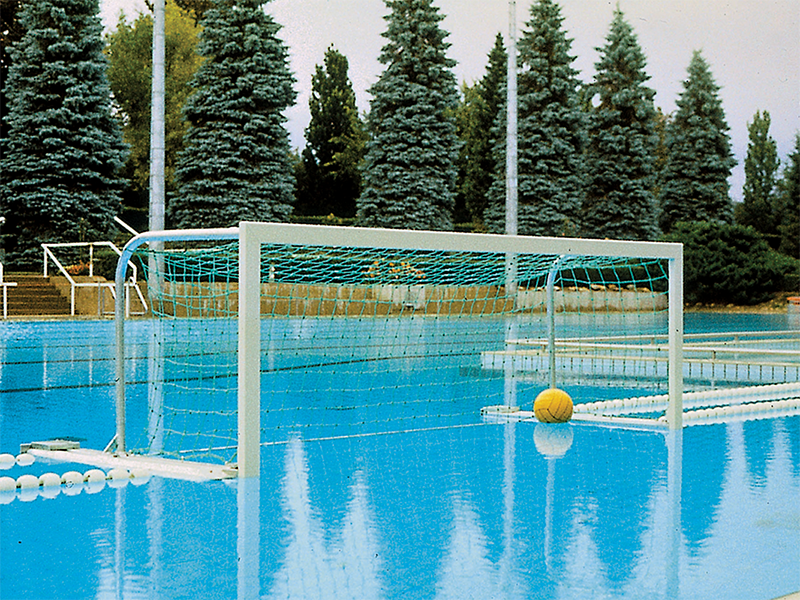
Goals are placed at both ends of the pool. They measure 3 m in width and 0.9 m in height. They are attached to the edge of the pool or float on the water surface thanks to special floats, ensuring that they remain in position during play.
Professional Water Polo Goals /3.00 x 0.90 m/ – floating, foldable
These goals comply with FINA / World Aquatics and LEN standards. They can be used during high-level competitions.
Worth reading: The lifespan of sports equipment – how to choose, use, and maintain it
Water Polo Cap
A professional water polo cap provides protection during play. It helps prevent water from entering the ears and protects them from injury. It is tied under the chin, preventing it from slipping off during the game. Water polo caps are made from materials resistant to chlorine to ensure the longest possible lifespan.
Caps are mandatory during matches. Their colors make it possible to identify the teams. Usually, one team wears white caps and the other wears blue caps. Goalkeepers always wear protective caps in red. Player numbers are also placed on the caps, making it easier for referees and spectators to identify the players.
Water Polo – Rules Concerning Uniforms
For men, the professional water polo uniform consists of elastic, close-fitting swimming briefs. Women wear one-piece swimsuits. These outfits do not restrict movement and provide comfort during play. During team presentations and when moving around the pool area, players often wear robes in club or national colors.
Water polo is a fascinating sport, but organizing training sessions or competitions requires proper preparation. This includes both knowledge of the current rules of the game and suitable technical facilities. Good balls, professional caps, and full-size goals are essential.
The effort is well worth it. Water polo is an Olympic sport with a rich tradition. It develops nearly all muscle groups and teaches teamwork. Well-prepared players also provide spectators with exciting sports entertainment during tournaments.
 English